Glossary term
Compound Interest
Compound interest is interest earned on both your original principal and the interest already added, causing savings, investments, or debt balances to grow on an expanding base over time.
Updated
Read time
What Is Compound Interest?
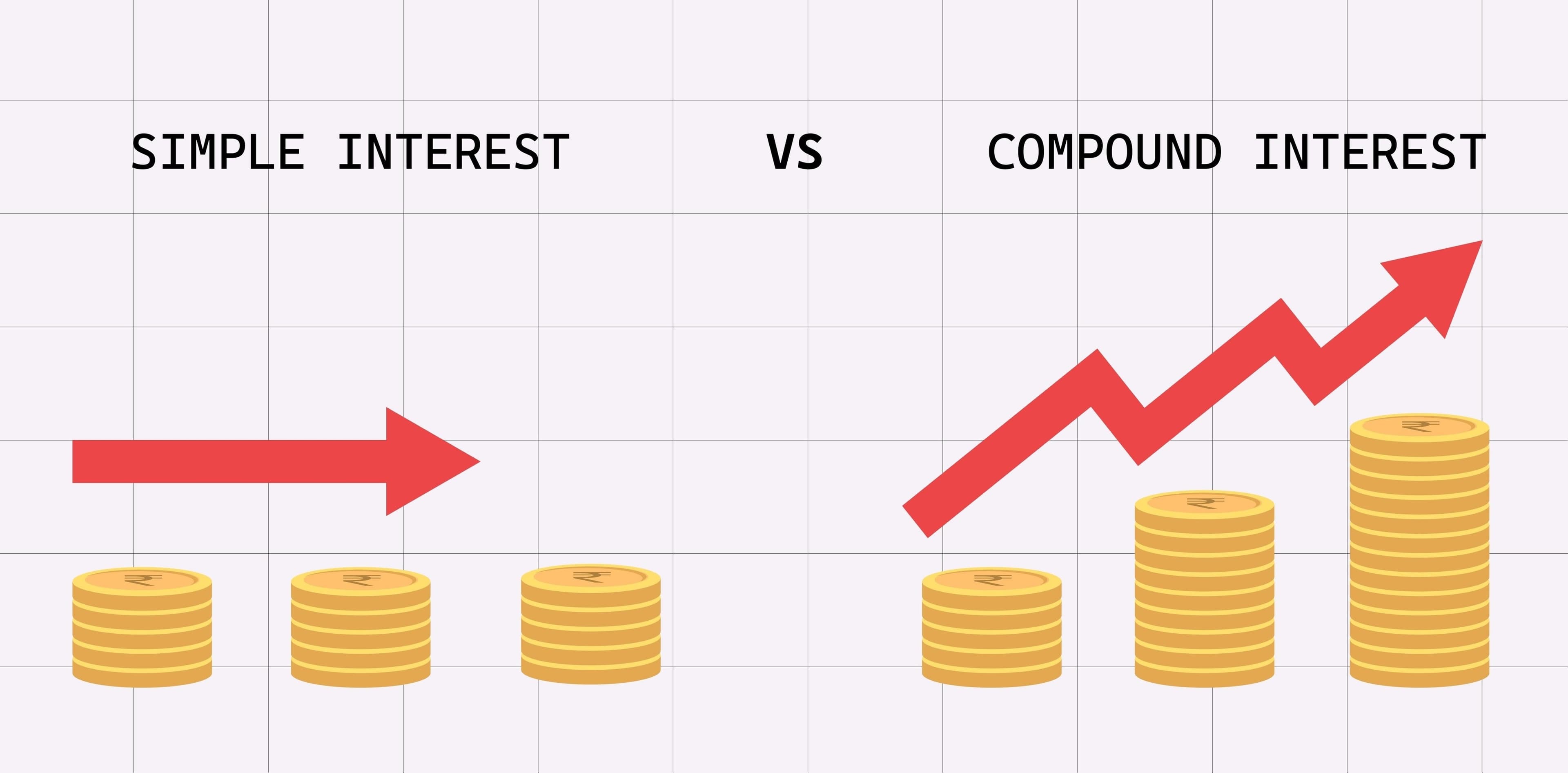
Compound interest is interest earned on both your original principal and the interest that has already been added. Instead of growing in a straight line, the balance begins to grow on a larger base each period, which is why compounding becomes so powerful over time.
That is the core idea behind many long-term saving and investing results. It is also the reason expensive debt can become harder to pay off when interest keeps being added to a balance that is already too large.
Key Takeaways
- Compound interest means prior interest becomes part of the base that earns future interest.
- Time is one of the biggest drivers of compounding, which is why starting earlier can matter more than many people expect.
- Compounding can help savings and investments grow, but it can also make debt more expensive.
- The interest rate, compounding frequency, and any additional contributions all affect the ending value.
- Nominal growth still has to be considered alongside inflation and taxes when judging the real result.
How Compound Interest Works
A common compound-interest formula is:
In the formula, A is the ending amount, P is the starting principal, r is the annual interest rate, n is the number of compounding periods per year, and t is the number of years.
With simple interest, interest is calculated only on the original amount. With compound interest, each new interest credit increases the amount on which future interest is calculated. That means the account is not just earning because time passed. It is earning because earlier growth has become part of the new base.
At first, the effect can look small. In the early years, the extra dollars created by compounding may not feel dramatic. Over a long time horizon, though, the math starts to separate sharply from simple growth because the balance has had many chances to build on itself.
How Compound Interest Rewards Time
Compound interest is one of the clearest reasons time matters so much in personal finance. A person who starts saving earlier often ends up with a larger balance than someone who saves more aggressively later, because the earlier dollars had more years to keep earning returns on prior returns.
That same logic helps explain why procrastination gets expensive. Waiting to begin means losing years when compounding could have been doing work in the background. In retirement saving, college saving, and long-term investing, that lost time is often harder to replace than people assume.
What Drives Compounding
Driver | Why it matters |
|---|---|
Interest rate or rate of return | Higher rates increase how fast the balance grows |
Time | More years give prior growth more chances to earn additional growth |
Compounding frequency | More frequent crediting can slightly increase the ending value |
Additional contributions | New money expands the base that can compound going forward |
People often focus first on finding a higher rate, but time is usually the most underappreciated variable. In many real household situations, starting sooner matters more than squeezing out a small increase in yield.
Compound Interest in Saving Versus Debt
Compounding is not automatically good or bad. It depends on which side of the balance sheet you are on. In a savings account, certificate of deposit, bond fund, or retirement account, compounding can steadily increase wealth if returns stay invested instead of being spent.
In debt, the same mechanism can work against you. A revolving balance with a high rate can keep adding interest to interest, especially when fees or minimum-payment patterns slow progress. Compound interest is celebrated in long-term investing and feared in high-cost borrowing.
Example
If you invest $1,000 at a 5 percent annual rate, you would have $1,050 after the first year. In the second year, the 5 percent is applied to $1,050 rather than just the original $1,000, so the dollar gain is slightly larger. The pattern keeps repeating. The early changes look modest, but after many years the gap between simple growth and compounded growth becomes much harder to ignore.
Compound Interest and Real Wealth Growth
Compounding tells you how fast a balance grows in nominal terms, but it does not tell you how much purchasing power you gained. If inflation is high, part of the growth may only be offsetting a higher cost of living. Long-term results are often better judged through the lens of inflation-adjusted return.
In other words, compounding explains how money grows on paper. Real return helps explain how much of that growth actually improves financial capacity.
The Bottom Line
Compound interest is interest earned on both principal and prior interest. Time can quietly turn even modest balances into meaningful sums, while the same math can make unresolved high-cost debt harder to escape.